Author of A Little Bit of Sunshine, Where Do We Go From Here?, The Imperfection of Us, Perfectly Ordinary People, From Something Old, The Road to Zoe, You Then Me Now, Things We Never Said, The Bottle of Tears, The Other Son, The Photographer's Wife, The Half-Life of Hannah, the 50 Reasons Series. And more…
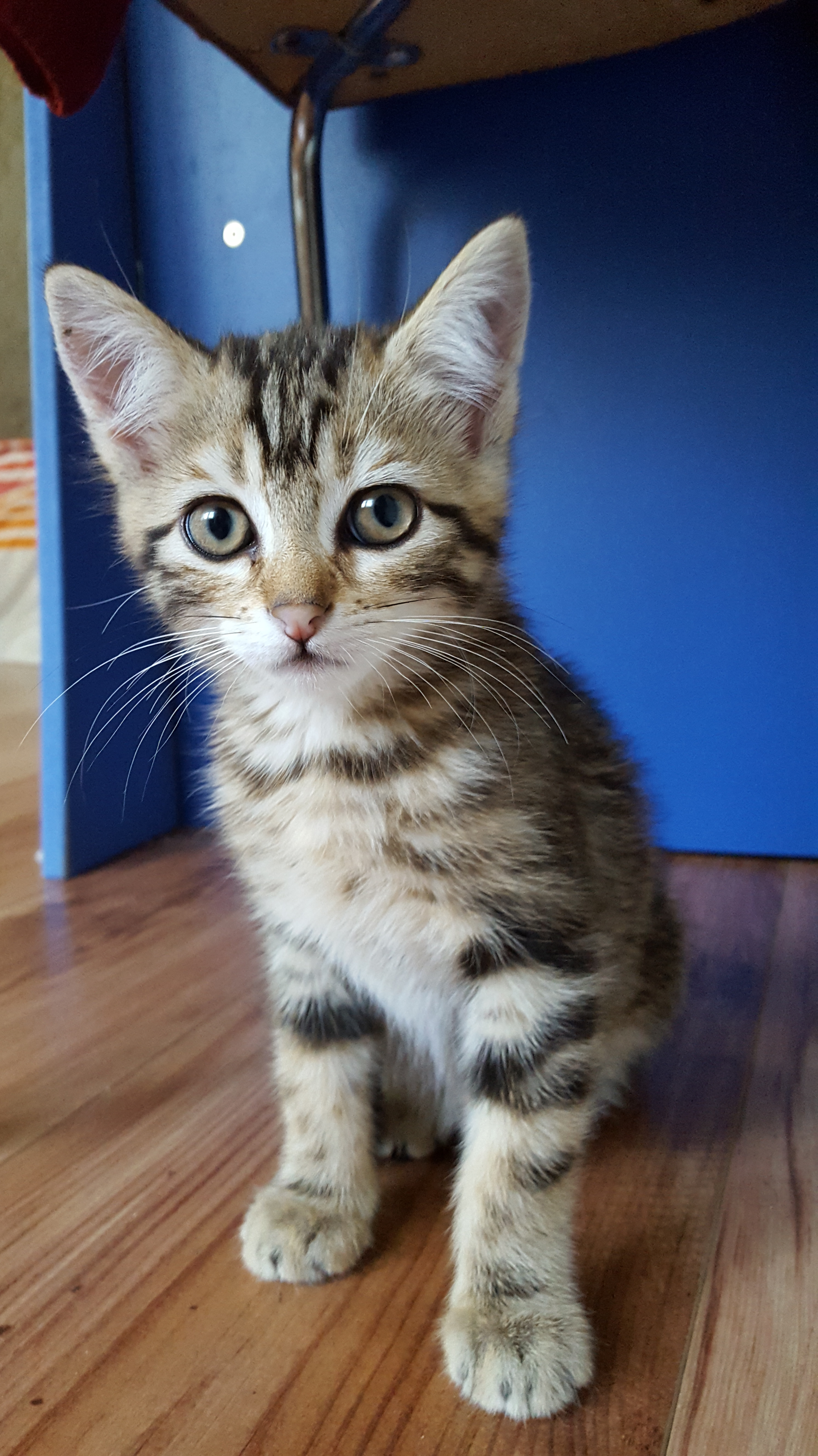
Mangy Poupon was born, along with her non-identical twin Patti, in the village of Castellane in the southern Alps on the 3rd of April 2016.
The kittens, though twins, had different fathers and while Mangy was the spitting image of their cuddly, petite, short-haired mother Chippie, Patti appeared to be of entirely different stock.
Though Chippy lived with a loving family in Castellane, the household suffered regular visits from a psychopathic Pitt bull called Lucifer, a true devil, owned by a monster of a man who would one day allow his dog to take Chippy’s life.
To save the kittens from certain death, they were put up for adoption, and a neighbour, Lisette, took them in.
As soon as he heard about the kittens, Lolo began to scheme. He wanted to adopt the kittens. Of course he did.
But Nick wasn’t so keen. The couple already had two cats, Lolo’s crazy ginger cat Typhus and Nick’s ageing old-timer Pedro, and Nick feared two youngsters would wear old Pedro out.
But knowing how irresistible kittens are, Lolo tricked Nick into visiting and, of course, Nick agreed to adopt. But only one of the sisters: Patti, while Mangy would be given to a friend.
But the sisters turned out to be inseparable, sleeping entwined for twenty hours a day. And so you can guess what happened next.
The youngsters were stunningly beautiful, and both Typhus and Pedro accepted their presence easily. Yes, there was a shortage of laps for the cats to sit on, but in Nick’s chilly mountain cabin, they soon learned to squeeze in together for warmth.
Slowly the sisters’ personalities evolved, so that Patti, who had been the most alert and intelligent as a kitten would morph to a state of nervous stress, while Mangy, who’d seemed a little slow at first, became a tiny, sweet cuddle-factory.
After a couple of years, Nick and Lolo were able to buy a proper house in more southerly climes where they wouldn’t get regularly snowed in, and it was here that the cats finally settled into their routines, each choosing a favourite cardboard box for their epic all-day snoozes.
Too soon, Typhus would be taken by cancer, to be replaced with a massive orange Maine Coon called Gaspard. Gaspard was young, and wanted to play, and he wanted to play most with petite Mangy, but he was just too big to be reassuring. He was, in fact, so big that Mangy was never entirely sure he even was a cat. So she would run as fast as her tiny legs would carry her, and Gaspard, finding the game thrilling, would bound after her. They never quite managed to be friends.
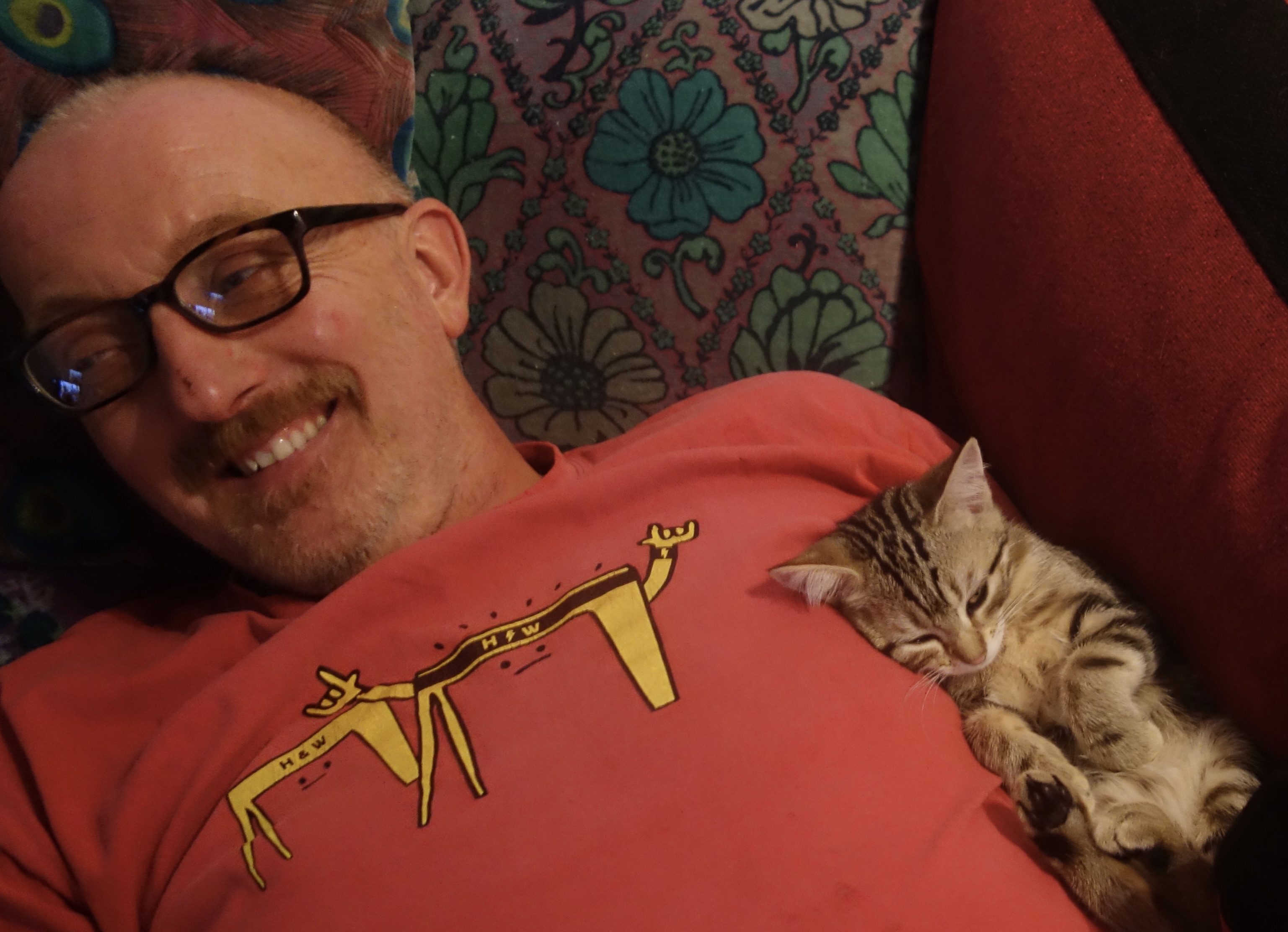
But Mangy put up with it all because Mangy was in love. She loved both Lolo and Nick, but because Nick was at home all day, and because she knew he would always protect her from Gaspard’s naughty games, she took to shadowing him 24/7. If he was in the office, she’d follow him to the office and watch him write. If he was in the pool, she’d sit at the edge and watch. And in the evenings, when he laid back to watch a film, she would edge up his chest as far as possible and then flop sideways so that her head lay on his shoulder, her nose touching his cheek.
If Nick turned to look her in the eye, Mangy would retain eye-contact, her pupils dilated, and then she would reach out ever so gently and bop him gently on the nose with her paw. “I love you,” she seemed to be saying, and Nick loved her back as much as any cat he has ever known.
In February 2025 Mangy Poupon went off her food. This was most unexpected. After all, her name, “Mangy Poupon” had been constructed from Mangy (eaty) because she wanted to eat constantly and Poupon (dolly) because you could carry her around like a doll.
Nick took Mangy Poupon to the doc, where she trustingly let herself be examined, but the vet didn’t know what was wrong. Antibiotics and anti-inflammatories seemed to provide a few days of respite, but then Mangy Poupon would cease eating again and flop, seemingly exhausted, in the middle of the cold kitchen floor.
After two weeks of fruitless treatment Nick sought a second opinion, and the second vet (equipped with ultrasound) spotted the problem immediately. Mangy had a massive tumour in her bowels, and within days it would be confirmed that she had metastases on all her major organs.
Nick was devastated that there were no reasonable treatment options. It just didn’t seem possible to lose that little love-machine so young, but Mangy’s health was declining by the day.
And so, on the 6th of March 2025, after two days of intense cuddles, Nick took his Poupon, still as trusting as ever, to the vets where, staring into his eyes for reassurance, she slipped into her longest sleep. Nick cried into her fur until it was soaked with his tears, while the understanding vet stood by, his hand resting on Nick’s shoulder. Nick said that nothing he has ever done was as hard a betraying his Poupon’s trust. He just hopes that somewhere, somehow, she understands that he did it for her.
She is survived by her heartbroken family: Nick, Lolo, sister Patti and naughty Gaspard.
You died far too young, Mangy Poupon, and without you on my shoulder, Netflix nights will never be the same again – Nick xxxxxxxxxxxx
In 2003, Pedro’s mother Fifi, a street cat from Antibes, had the brilliant (and original) idea of giving birth in the refrigerated fish reserves of Marineland.
Fifi felt proud of herself for this creative solution, because though her kids might get chilly, they would never be hungry. And hunger, she knew from experience, was the worst thing of all by far.
A few weeks later, a Marineland employee, while shovelling semi-frozen cod from the reserves to feed one of the long-suffering dolphins, would discover Fifi and her litter of cats, and organise capture and transport to the Jean-Duflos cat refuge in Antibes.
Jean Duflos being by far the nicest cat refuge in the region was another sign that the stars were smiling on Fifi.
At the cat refuge, Fifi’s family received checkups and luxury five star healthcare. The doctors admitted surprise at how well nourished they all seemed to be. And one by one, put the cats up for adoption.
The refuge named the smallest kitten Themis, for reasons that only they can ever know.
Now Themis was the runt of the litter. Where his brothers and sisters climbed and jumped and bit, Themis preferred to doze in the sun and even at nine weeks he could appear a little wobbly on his feet. It was precisely this calm unpretentious nature that caught the eye of computer buff Nick Alexander when he turned up at the cat refuge looking for a new companion for his beloved, recently widowed cat Paloma. Where Themis’ sister bit Nick’s finger, and Themis’ brother latched onto his arm as if it was a climbing frame, Themis himself simply rolled and offered his tummy for tickles. Nick knew then that he was the one.
Back home, Paloma was less sure. She’d recently lost the love of her life, a Persian kitten called Pablo, who due to poor treatment by unscrupulous breeders suffered from osteoporosis and had needed to be put down at the age of only six months.
Paloma, who’d adopted Pablo with a level of passion rarely seen in the cat world, was heartbroken, and way too busy grieving to consider transferring her affections to Themis.
Nick decided to rename Themis “Pedro”, hoping that the name would remind Paloma of her beloved Pablo, but though Themis – now Pedro – followed Paloma around constantly, she simply refused to mother him. This would be the first and only trauma of Pedro’s life.
Nick’s boyfriends came and went (so to speak) and sometimes they stayed for a few months. Paloma and Pedro weren’t fussy, they loved them all, getting used to the comings and goings, and as long as Nick was around – which he always was – they were happy. Yes they preferred it when he was in love, and making them dance with him to when he was crying heartbroken into their fur, but either way, they knew they were needed.
When good times came around the family of three moved from Nice to a house in Grasse with a garden, which they loved, and when the money dried up again, back from Grasse to a tiny flat in Old Nice. Having got used to a house with garden, they didn’t entirely approve.
Paloma, who had lived on the streets for many years, did her best not to care. As long as she was warm and had food and cuddles, she could be happy. But Pedro, who’d never known hardship, was miserable, and would make a bolt for the door of the apartment any time it opened. He escaped so many times it was a miracle that he was never lost.
At the time, Nick had to travel to Asia regularly for his job, and during one particularly long trip to Hong Kong,Thailand and Australia, Paloma and Pedro were sent to stay with their Auntie Sylvie who had a beautiful house above Villefranche-sur-mer not to mention two cats of her own. Pedro the “cool dude tabby”, could be happy anywhere and get on with any cat on the planet, but Paloma, who during her homeless years had developed a more feisty, competitive personality, could not. She specifically couldn’t bear Sylvie’s female cat Nishty Doy, and eventually deciding erroneously that Nick was never going to return, she chose to run away and return to the streets. Thus, by the time Nick got back from Australia, Paloma, heartbreakingly, had vanished.
Nick returned with Pedro to his flat, but without Paloma things just weren’t the same. Even Pedro, despite Paloma’s rejection, was heartbroken without her presence, and Nick, unable to get used to the idea that Paloma was gone for good, would return daily to Sylvie’s place to hunt and call for her, until one day, many weeks later, by miracle, she reappeared running up to him and head-butting his leg. She’d been living rough for a couple of months by that point and was malnourished with broken teeth and ribs.
After visits to the cat-hospo, Nick and Pedro nursed her back to health, and this time she was so relieved to be back that she finally got over her hatred of Pedro. From that point on Nick often got home from work to find them curled up together. Especially when it was cold!
It was about that time that Nick quit his job and started to write, and both Paloma and Pedro were over the moon about this because it meant he was home all day. Nick installed cushions right and left of his computer monitor and the cats liked to curl up there while he worked, lured by the guarantee of regular unpredictable strokes.
Nick was finding living in Nice in summer harder and harder due to the heat and the massive influx of tourists, and was simultaneously running out of money, so he came up with a plan. He would buy a tiny cabin up in the mountains behind Nice so he could AirbNb his flat out every summer. And once he started looking he quickly found a bargain. Yes, it was a wreck and, yes, also the scene of a double murder (I kid you not), but that was also why it was cheap!
During a month while he scrubbed the bloodstains from the walls (again, I kid you not) and renovated the tiny cabin to make it liveable, he Paloma and Pedro slept in a tent at the top of the garden listening to the wildlife snuffling past the tent. The little family of three had never been cosier or more tightly bonded.
Once the house was finished they all liked living there so much that Nick’s summer stays got longer every year. Nick found that he could write better up there, too, and it was during these years that (between cat stroking duties) that he wrote the 5 x book 50 Reasons series, 13:55 Eastern Standard Time and The Case of The Missing Boyfriend – his first mainstream hit. Incidentally, it was just as well it was a hit, as Nick had entirely run out of money by then and was having to borrow from Auntie Sylvie to pay the electricity bills and even buy cat food.
But the Missing Boyfriend was a hit, and The French House, which followed, a mega hit, so suddenly good times were back. Nick was able to repair the mountain cabin properly, get rid of his old, terrifyingly dangerous car, and buy the cats some top notch nibbles. From time to time he’d give Pedro raw cod, which, because it reminded him of his childhood, always sent him into fits of ecstasy.
It was about then that Nick met future husband Lolo, the first man ever to not run a mile when he saw where Nick actually lived. It was quite shockingly remote up there, after all.
Soon enough, because everyone in the family agreed that Lolo was so clearly The One, he and his mad orange cat Typhus joined the family on a permanent basis.
Now Typhus was a strange character – it was often said that he wasn’t that “easy to like”. But once you’d figured him out, like all quirky people, he was more interesting than if he’d just been easy. Eventually Paloma and Pedro got used to Typhus’ quirks to the point where Nick would wake up from his siesta in the hammock to find that he had not one, not two, but three cats sleeping on him.
The years went by.
Nick wrote more and more novels in the mountains and made enough money to rent proper houses in warmer climes they could stay in during winter.
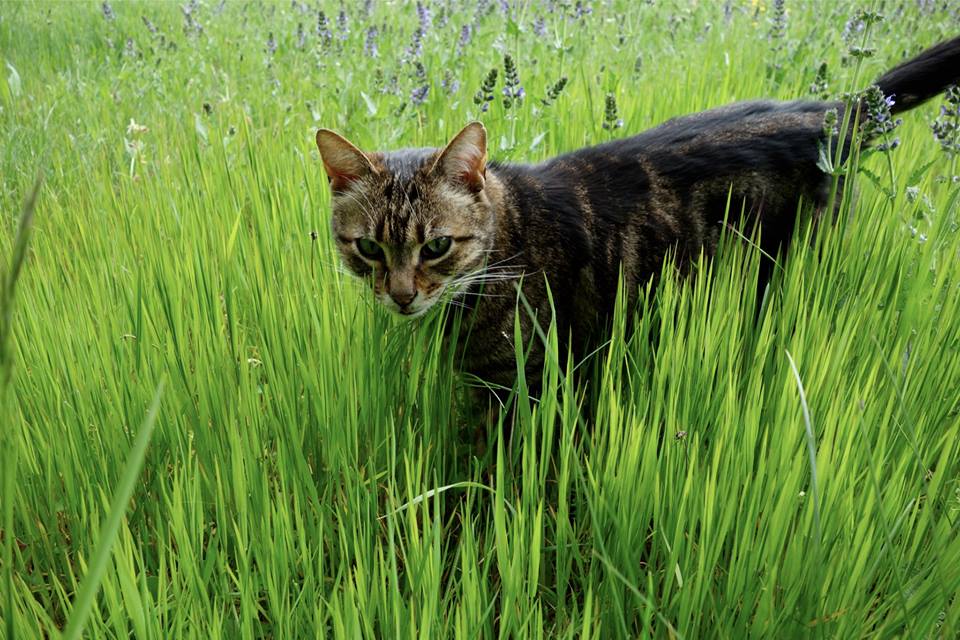
When Paloma died, at the grand old age of eighteen, everyone missed her so much that they were relieved when Patti and Mangui moved in to fill the void. Typhus, stricken by cancer, eventually died as well, creating a vacancy that would be filled by massive lovable Maine Coon called Gaspard. Pedro, the only original remaining, took it all in his stride. If there was one thing that defined Pedro it was that he was and would always remain the cool dude. Relaxed was his middle name and he never once bit anyone, not even in play, and he never once growled or flashed his claws, even by accident, no matter the level of provocation.
Pedro’s solution to any challenging situation remained to roll over and offer his tummy, and it was a strategy that worked with humans and cats alike.
The only violence that Pedro ever exhibited was to the door-mice that infested Nick’s mountain cabin. These he dispatched (and ate) with shocking efficiency, killing and eating one or two a day, every day, for years, until finally they were all gone. And my god, we loved him for that. If you’ve ever had a dormouse infestation, you’ll understand.
Three years ago the family moved to a bigger house where they could spend the entire year, and Pedro was thrilled to discover it had a sofa in the sun. If there was one thing he couldn’t stand it was the one thing he’d hated about his childhood. He could not bear to be cold.
Old Pedro, I’m sad to announce, died yesterday.
He’d lived to the fine old age of 20 years and ten months which is about 99 in human years. Like all who have the luck of getting to be that old, he’d begun to suffer from an assortment of increasingly severe aches and pains. Towards the end he was also plagued by dementia, and would forget where he was and why he was, and whether he had just eaten or was still hungry.
When he was lost and bewildered, a tickle on the tummy would reassure him. And when his appetite vanished, some raw fish – no doubt a reminder of his long lost childhood in Marineland – would be enough to get him eating again.
Pedro had lived in seven difference places, known five of Nick’s boyfriends and spent more than ten years with him and his husband Lolo. He’d lived with five different cats and accompanied Nick during the writing of nineteen novels. But now he was tired and in pain and he did his best to express that he’d had enough. A sad decision had to be taken.
He died in the arms of the man who adopted him more than twenty years ago, and who has loved him, fed him, cherished him ever since, slipping painlessly, still purring, still offering his tummy for tickles, into sleep. If we must leave this mortal coil – and we know that we must – then there’s surely no better way to go.
He is survived by Nick, Lolo, Mangui, Patti, Gaspard and nineteen novels which couldn’t have been written without him. He will be sorely missed by us all.



 Nick Alexander